The Details That Separate Premium Men’s Watches Today
Most men’s watches look stunning in photos. The real question is what happens after you buy one. The strap frays, the clasp stiffens, and the dial loses its depth under office lighting. That’s the gap between a watch that photographs well and one that actually wears well. Premium pieces close that gap. Here’s how to read the details that matter.
Allows Movement
The first thing to do when buying luxury watches for men in Australia is to understand what’s powering the watch. Battery-powered quartz movements are cheap and accurate, but they need replacing. Solar and Eco-Drive movements are smarter long-term choices. Mechanical movements are romantic, but they require servicing. For everyday wear, you want accuracy without the maintenance burden. Ask yourself: How much effort am I willing to put into keeping this thing running?
Case and Bracelet Construction
This is where brands separate themselves fast. Cheap watches use hollow links. They flex when you press them. Premium watches, for instance, a Victorinox FieldForce Classic Chrono, use solid links with brushed and polished finishing. Run your thumb along the bracelet. If it feels substantial, it probably is. Also, check the case thickness. Slim profiles sit flush under cuffs, while bulky cases snag on sleeves. A well-engineered case is thin and strong.
| Feature | Budget Tier | Premium Tier |
|---|---|---|
| Bracelet links | Hollow, lightweight | Solid, weighted |
| Finishing | Single-tone polished | Brushed + polished combo |
| Crown | Plastic or basic steel | Screw-down or flush-fit |
| Clasp | Fold-over basic | Push-button deployment |
| Water resistance | 30m | 50m-100m |
These gaps aren’t subtle. Once you feel the difference, budget bracelets become impossible to ignore.
Dial Design
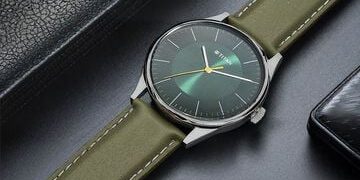
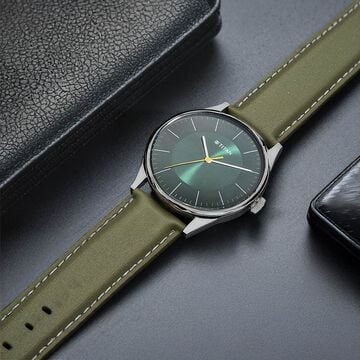
The dial is the face, and faces reveal character quickly. Cheap dials are flat, while premium dials have layers. Sunray finishes catch light differently at every angle. Applied indices (the hour markers) are raised from the surface rather than printed on. You can feel the difference with your eyes closed.
To select a quality dial, look for these things:
- Luminous hands that glow evenly, not patchily
- Crisp printing on subsidiary text (no smudging under magnification)
- Symmetrical layout where every element sits exactly where it should
- Colour depth that shifts in different lighting conditions
Check these against any watch you’re considering. A dial that fails two of them is already failing you.
Watches Worth Looking at Right Now
Theory is useful, but examples are better. You can divide men’s watches into a few meaningful categories, such as solar-powered everyday wear, timeless dress watches, and fashion-forward statement pieces. Each category has a different job. Each requires a different set of priorities:
-
Solar-Powered Eco-Drive
These watches are built for the man who wants reliability without thinking about it. There are no battery swaps or windings. The technology has matured to the point where you genuinely cannot tell the difference from quartz in daily use. What you gain is convenience. What you lose is nothing. If you’re looking for a credible timepiece in this category, an Eco-Drive Calendrier can be a great pick.
-
Classic Dress Watches
This is the category that never ages poorly. The design is restrained, the palette is neutral, and the proportions work for everything from the boardroom to brunch. These watches aren’t trying to impress anyone. They succeed precisely because of that restraint. They’re the wardrobe staple of the watch world.
-
Statement Watches
These watches get unfairly dismissed. Done poorly, they are shallow. When done well, they add intention and personality to the wrist in ways neither of the other categories can. The best ones are slim, confident, and wear better than they photograph, like a Wenger Urban Classic Chrono.
Strap and Bracelet Wearability
People totally underestimate comfort. A heavy bracelet becomes noticeable after four hours. A clasp that catches on clothing becomes infuriating after a week. A bracelet with no micro-adjustment options will fit perfectly in winter and slide around in summer when your wrist size shifts with temperature. Premium watches solve these problems quietly. You just notice, one day, that you’ve worn the watch all day and forgotten about it. That’s the goal.
The Confidence of Provenance
There’s one more detail that separates premium watches. It isn’t visible on the dial.
It’s the brand’s track record. Citizen, Seiko, and Armani Exchange all sit in a tier where quality control is consistent, after-sales service is available, and the watch retains its character for years. Buying from a reputable, authorised retailer adds another layer of assurance. You know what you’re getting is genuine, warranted, and fairly priced.
In Summary
The best men’s watch is the one you actually wear. Not the flashiest. Not the most expensive. The one that fits your life, flatters your wrist, and holds up without asking much in return. The details covered here will help you find that watch faster and avoid the ones that look good once and disappoint quietly ever after. Start with what moves you. Then check the details in that order.